Block Blast TNT
GreenPixel GamesSimulation
3.438.00 Reviews
- Version
- 1.43.2008
- Installs
- 5.00M
- Age Rating
- Everyone
Screenshots
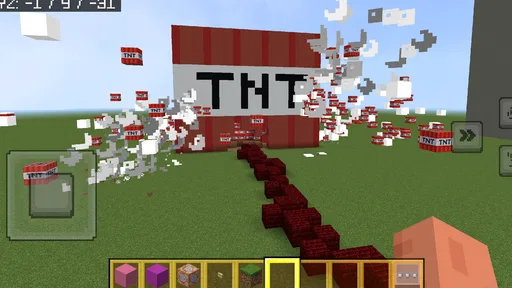
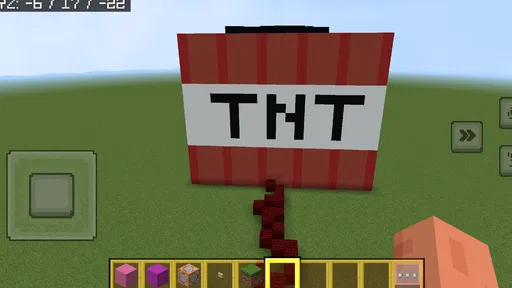
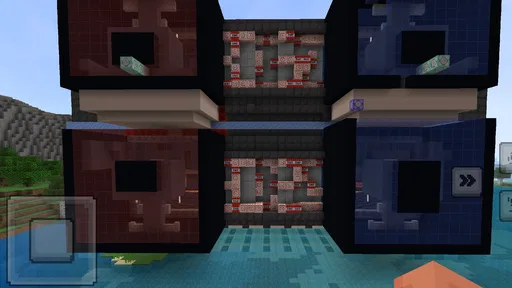
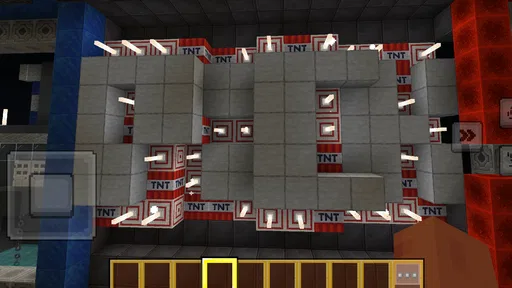
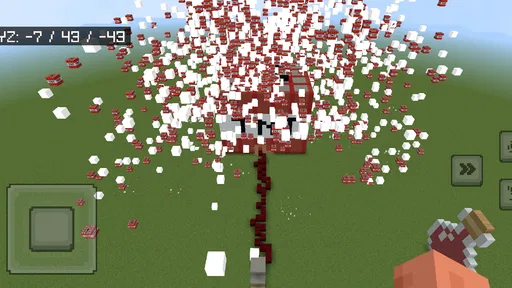
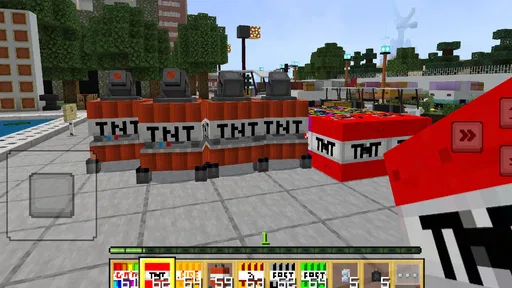
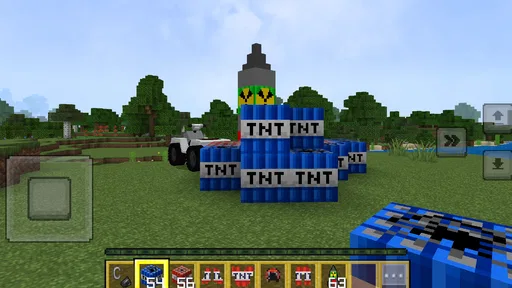
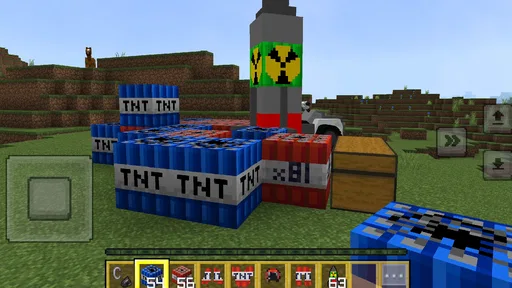
Our Review of Block Blast TNT
 Analysis by Appyee
I spent time with Block Blast TNT, a free simulation game from GreenPixel Games built around one clear idea: breaking blocks while trying to stay alive as the board becomes more chaotic. That focus is its biggest strength. It does not ask me to learn a large world, manage a complicated character, or follow a long story. Instead, it turns a familiar block-clearing routine into a short survival challenge where each placement can make the next few moves easier or much worse.
That sounds simple, and the basic controls are simple, but the pressure comes from planning ahead. I am not only looking for an immediate match. I am also watching the remaining space, considering where a blast might open room, and deciding whether a safe move now will leave me with an awkward board later. The result is a game that works well in small sessions, although it can become repetitive if I want a deeper simulation experience.
Why the blast-and-survive idea matters
The central capability here is the way block clearing changes the board instead of merely rewarding a completed line. In practice, the explosive theme makes every successful clear feel like a rescue operation. I place pieces, look for a useful arrangement, and try to prevent the board from turning into a sealed collection of leftovers. The challenge is not just making progress; it is preserving options.
That distinction gives the game more tension than a completely relaxed block puzzle. A careless placement may not fail immediately, but it can remove the open spaces needed for the next pieces. I often found myself choosing a move that looked less satisfying because it kept two areas available rather than filling the most obvious gap. That is the kind of decision that makes the survival angle meaningful.
I would describe the experience as a lightweight block-clearing survival game rather than a full management simulator. The simulation label fits the repeated cause-and-effect loop: my choices shape the condition of the board, and the condition of the board determines how flexible my next turn will be. There is no need to memorize a complicated control scheme, but there is a real difference between reacting quickly and planning responsibly.
The short store summary, “Blast blocks, survive chaos!”, captures the mood without explaining the useful part. The useful part is learning to treat empty space as a resource. A clear is valuable, but the shape of the space left behind can matter more than the clear itself. Once I started thinking that way, the game stopped feeling like random tapping and became a compact exercise in risk management.
The first few sessions are easy to understand
My first impression was that the game is approachable enough for someone who normally avoids strategy games. The block-based layout communicates its purpose quickly, and the explosive presentation gives ordinary placements a little more urgency. I did not need a long tutorial to understand the basic goal: keep the board workable, create clears, and avoid letting the available room disappear.
That accessibility is important because the game is best when I can start a session without preparation. It suits a short break, a commute, or a few minutes before bed. I can pick it up, make decisions immediately, and stop without feeling that I have abandoned a large campaign. At the same time, the simple entry point should not be mistaken for unlimited depth. The longer I played, the more the quality of each placement mattered.
How I approach the board in practice
I get better results when I inspect the whole board before making the first impulsive move. The tempting action is usually the one that creates the quickest visible result. The smarter action is often the one that leaves a broad, connected area for future pieces. This is especially important when a move clears blocks but creates narrow pockets that are difficult to use afterward.
My most useful habit was to delay a satisfying clear when it would damage the board’s shape. That sounds backward, but it prevents the common mistake of treating every immediate reward as automatically good. I began asking three questions before committing: where will the next piece fit, which open area will remain, and whether this move gives me more than one possible follow-up?
Another practical lesson is to avoid building a tall or awkward cluster on one side simply because that side currently looks convenient. A lopsided board can reduce flexibility even when plenty of empty cells remain elsewhere. Keeping the main playing area balanced gives me more ways to recover from an inconvenient piece. I found this more reliable than chasing a single dramatic blast.
The game’s chaos is therefore best handled through preparation rather than speed. Fast decisions can feel exciting, but rushing makes it easier to overlook a blocked corner or waste an open region. Players who enjoy thinking several moves ahead will probably get more from the system than players who only want constant visual action.
A realistic everyday use case
I can easily see using this during a five-minute waiting period. If I am waiting for an appointment or taking a short break from work, I do not want a game that requires me to remember a quest, coordinate with other players, or rebuild a complicated setup. This one lets me focus on a single board and make a few meaningful choices. If the session ends badly, I can simply start again without much emotional investment.
It also works as a gentle mental reset. I found that concentrating on open spaces and possible clears pushed unrelated thoughts aside for a while. The game is not a substitute for a serious planning tool, of course, but it gives the mind a small, defined problem to solve. That makes it more engaging than a completely passive time-killer while remaining less demanding than a long strategy title.
For younger players, the Everyone content rating makes the game broadly approachable. The rules are easy to explain, and an adult could show a child the basic idea in a short sitting. Still, the survival pressure may frustrate someone who expects every move to work out. I would present it as a game about trying different placements, not as a guaranteed-success puzzle.
Where the trade-offs become noticeable
The main limitation is also connected to the game’s strongest feature: the focused loop can start to feel narrow. The blast-and-survive format gives each move a clear purpose, but it does not provide the variety of a large simulation game with multiple systems to manage. If I want character development, exploration, a story, or a broad building project, this is not the right choice.
I also think the balance between randomness and planning will decide whether a player stays interested. Planning is rewarding when I can see how a careful move improves my options. It is less satisfying when the next situation feels difficult mainly because the available placement is inconvenient. Players who dislike losing after a long sequence of careful decisions may find the survival structure stressful rather than entertaining.
Another trade-off is session length. The game is convenient because it can be played in short bursts, but that same compactness means it may not hold my attention for an entire evening. I would choose it when I want a focused challenge, not when I am looking for a large amount of content. It complements a bigger game rather than replacing one.
Compared with a traditional block puzzle, the TNT theme gives the act of clearing more urgency and makes board preservation feel central. Compared with a full simulation game, however, the decision space is much smaller and the feedback loop is much faster. A traditional puzzle may be better for someone who wants a calmer, more methodical session. A deeper simulation may be better for someone who wants long-term projects and consequences that extend beyond one board.
There is also a learning curve hidden inside the apparent simplicity. The controls are easy, but good judgment is not automatic. New players may spend their first sessions filling convenient spaces without considering the shape left behind. That is normal, though it can make the early experience feel more random than it really is. Once I began protecting flexible areas, my decisions became more deliberate and the survival objective made more sense.
Small habits that improve the experience
My first recommendation is to value flexibility over decoration. A large-looking blast is not always the best move if it leaves isolated holes. Before placing a piece, I check whether the resulting empty area can accept several shapes or only one very specific arrangement. This simple check is more useful than trying to predict every future move.
Second, I avoid spending all the useful open space on one side of the board. Keeping more than one workable region gives me a fallback when a piece does not suit the area I expected to use. This is a subtle advantage because the board may look less tidy, yet it remains easier to rescue.
Third, I treat a dangerous cluster as a planning problem rather than an emergency that must be attacked immediately. Sometimes the best response is to prepare the surrounding area first so the eventual clear does not leave another blockage. That approach feels slower, but it reduces the chance of solving one problem while creating a worse one.
Finally, I recommend stopping after a frustrating run instead of repeatedly making rushed placements. Because the game is free and easy to restart, it is tempting to chase a better result immediately. A short pause helps me return with a clearer view of the board. The game rewards attention, and tired attention is usually worse than a modest break.
Who will gain the most from it
The best audience is anyone who wants a quick puzzle with a little survival pressure. It is especially suitable for players who enjoy arranging pieces, spotting efficient clears, and improving through repeated attempts. The free price removes the barrier to trying it, while the Everyone rating makes it a reasonable option for a broad audience.
It is also a good fit for people who like games that explain themselves through play. I did not need to study a long rulebook. The board shows the consequences of my decisions, and each failed attempt suggests a practical lesson: preserve space, avoid awkward pockets, and do not confuse a quick clear with a safe clear.
Players who want a game for short breaks should appreciate the compact structure. Someone who has only a few minutes can still make meaningful progress within a session. The game does not demand the kind of uninterrupted attention associated with a narrative adventure or a large-scale management title. That makes it easy to keep installed as a dependable option for idle moments.
On the other hand, I would skip it if my priority is deep simulation. The category may attract people expecting resource chains, construction systems, or a world that develops over time. This game’s simulation quality comes from managing the changing block layout, not from running a detailed virtual environment. That difference is worth understanding before downloading it.
Device and current release context
Block Blast TNT runs on Android devices using version seven or later, which keeps its basic compatibility fairly broad. The current version is 1.43.2008. I would still check the experience on the particular phone or tablet I plan to use, especially if I prefer a larger screen for examining the board. A bigger display can make the arrangement easier to read, while a smaller phone keeps the game especially convenient for quick sessions.
GreenPixel Games has positioned the title as a free game, and its reach is clear from more than five million installs. The average rating sits at 3.4 from around 4.4 thousand ratings, so I would approach it with realistic expectations rather than assuming it will suit everyone. That mixed reception makes sense to me: the core loop is immediately understandable, but its repetition and survival pressure will divide players.
The listing shows 38 reviews, and the game was released on July 15, 2025. Those details place it as a relatively recent option for people exploring block-based games, but they do not change my main conclusion. The important question is whether the blast mechanic and board-preservation challenge match the kind of short, focused play I want.
My recommendation after playing
I recommend Block Blast TNT to anyone who likes simple rules with consequences that become clearer through practice. Its most successful idea is not merely making blocks disappear. It is forcing me to think about what the board will look like after the explosion. That gives ordinary placements a useful layer of judgment and turns spare minutes into a small planning challenge.
I would not recommend it as a replacement for a full simulation game, a story-driven adventure, or a calm puzzle with no pressure. The experience is focused, repetitive by design, and sometimes demanding when the board becomes awkward. Those are not hidden flaws; they are the trade-offs of keeping the game quick and easy to start.
For me, the deciding strength is the way it rewards restraint. The best move is often not the most dramatic one, and learning that changes how I read the board. If that kind of compact decision-making sounds enjoyable, the free download is easy to justify. If I want a richer world or long-term progression, I would look elsewhere. As a small survival-oriented block game, though, it offers a clear purpose and enough tactical tension to earn a place in my short-session rotation.
Verdict
Strengths of Block Blast TNT
- Quick rounds make it easy to play during short breaks.
- Simple controls are easy for new players to understand.
- TNT blocks can clear crowded areas and create satisfying combos.
- Offline play is useful when you have no internet connection.
- Bright visuals and sound effects make clears feel rewarding.
Limitations of Block Blast TNT
- Difficulty can rise sharply after only a few successful moves.
- Random block shapes may leave you dependent on lucky placements.
- Frequent effects can become distracting during longer sessions.
- Limited strategic depth may reduce its appeal for expert puzzle fans.
- Progress and high scores can feel repetitive without varied objectives.
Similar Picks in This Category
View All
Truckers of Europe 3
Wanda Software4.3

Town Building Life Simulator
XGame Global4.2

Fidget Toys Trading・Pop It 3D
Freeplay Inc4.7

Sculpt People
CrazyLabs LTD4.4

Scary Teacher 3D
Z & K Games4.2

Hair Tattoo: Barber Shop Game
CASUAL AZUR GAMES4.3
Frequently Asked Questions
What is Block Blast TNT?
Block Blast TNT is a block-puzzle game that combines classic grid-based placement with explosive TNT mechanics. You place differently shaped blocks on the board, complete rows or columns, and use explosive pieces to clear surrounding tiles or create space. The main challenge is planning several moves ahead while avoiding a board that becomes too crowded to continue.
How do you play Block Blast TNT?
The basic controls are simple: select the available block and drag or tap it into an open position on the grid. Completing full lines usually removes them and awards points, while TNT blocks can clear nearby spaces when activated according to the game’s rules. Since pieces generally cannot be rotated freely in many versions, checking the remaining shapes before every move is important.
Is Block Blast TNT free to download and play?
Block Blast TNT is generally offered as a free-to-download game, allowing players to start without paying an upfront purchase price. However, availability of advertising, optional in-app purchases, extra rewards, or other monetization features can vary depending on the version and platform. It is worth checking the store listing before downloading, especially if you prefer games without ads or paid boosts.
Can Block Blast TNT be played offline?
The core puzzle experience may work without a continuous internet connection, which makes Block Blast TNT suitable for short sessions while traveling or when mobile data is unavailable. Nevertheless, some features—such as advertisements, cloud saving, leaderboards, analytics, updates, or purchases—may require internet access. Test the game offline after installation if uninterrupted access is important to you.
Is Block Blast TNT suitable for children and casual players?
Block Blast TNT is easy to understand and does not usually require fast reflexes, so it can appeal to children, adults, and casual puzzle fans. The increasing pressure created by limited board space can still make later rounds challenging. Parents should review the current age rating, advertising, privacy information, and any in-app purchase options before allowing younger users to play.
Play our best games!


